Bevin and I arrived in Seattle this afternoon. Settling in. . . . . . .
Thursday, February 22, 2007


Saturday, February 17, 2007
The adventure begins
Friday was my last day at work until May 21. I leave tomorrow to drive to Utah. I'll pick Bevin up at 11:00 a.m. on Tuesday morning. Burn her bridges.
And then the adventure begins. I am so looking forward to bringing Bevin to Seattle.
And then the adventure begins. I am so looking forward to bringing Bevin to Seattle.
Friday, February 09, 2007
My eddy in the global economy
Recently I’ve been attending to my own eddy into the global economy. I was given the job at my work of “mentoring” a new doc team in India, charged with supporting and documenting Adobe products that are being engineered there. Unfortunately we didn’t have a stellar beginning. Too late. Every decision tactical--and a bit late at that. Never quite got ahead of the curve. . .
For the past week (and this continues next week), we’re hosting our new writing manager (pretty much “all” of the doc team in India) from Bangalore. Welcome to Adobe, our group, corporate America.
I just did a google search on Bangalore. I’ve been hearing all week from Guru of the virtues of Bangalore. He’s definitely a home boy. Grew up there. Proud. Silicon Valley of India. Educaton. English spoken in the home (an important point for a writer writing in English for an American audience. Interestingly, he couldn’t tell me the population of Bangalore. The internet tells me it’s somewhere between 5 and 6 million--a pretty big city by American standards. Certainly he finds our mild 50 degrees of the past week cold. He did let me know that my love of driving would be difficult to maintain in India.
I’ve been putting off making a judgment about Guru. He arrived in the middest--never a comfortable moment. A minor crisis on his first day. Perhaps his name is a harbinger?
It’s an interesting puzzle to put together a picture of a person conjured up from a time zone discrepancy of 13.5 hours. I’ve learned that folks in Bangalore work late. That means that if I’m on e-mail by 7 in the morning, I have perhaps 30 minutes of real-time e-mail with my colleagues in India. If I send an e-mail at 7:00 a.m., they’re answering my message at 8:30 p.m. These global conversations demand patience. I send a message in the morning. I get my answer (if my friends in India are attentive) 24 hours later. In this world of instant messaging, an abberration, a frustration, a chance to contemplate.
I have been working with two folks in India--I realized with chagrin today that I’m not even sure both work in Bangalore. Does one work in Noida? A female project manager who knows almost nothing about writing. But she’s clearly competent, proactive, fearless. She is always pressing at the edges, moving folks forward, forging into a space with a meeting, a suggestion, an action item. Since she knows nothing about docs, I’m as often dismayed by what i face when i fire up my e-mail in the morning as I cheer. But I do cheer. She is smart, active, accessible, flexible. No matter how often I have to pull her back, press her in another direction, I find her a pleasure to work with.
And then there’s Guru. After a week, I’m left cautious in my estimation of his prospects in the company, and a bit sad. I like him. He’s clearly accomplished in the world he inhabitants. I’ve learned that competent tech writers are far scarcer in India than engineers (and pretty much all competent tech writers, and even more editors, aspire to management). He has some six years of experience with such tech companies as HP. I do believe, after a week in discussion with him, that he is well informed, competent in his sphere. But I fear he is too accommodating, too deferential, too cautious to succeed in the situation he’s in.
And I’m left contemplating questions I can’t answer. How much of this is Guru? Why do I respond to Bhavna, despite her innocence of my profession? Why do I worry about him? How much of this is cultural? How much of this has to do with gender? How much is simply transactional, tactical?
I’m far too tired this Friday night to answer this question. But these are clearly questions that are in the center of my work life going forward. Do I have the tools to do a good job here? I am an Idaho girl after all? How did I end up here on this frontier? Never knew this is what I was preparing for. . . .
For the past week (and this continues next week), we’re hosting our new writing manager (pretty much “all” of the doc team in India) from Bangalore. Welcome to Adobe, our group, corporate America.
I just did a google search on Bangalore. I’ve been hearing all week from Guru of the virtues of Bangalore. He’s definitely a home boy. Grew up there. Proud. Silicon Valley of India. Educaton. English spoken in the home (an important point for a writer writing in English for an American audience. Interestingly, he couldn’t tell me the population of Bangalore. The internet tells me it’s somewhere between 5 and 6 million--a pretty big city by American standards. Certainly he finds our mild 50 degrees of the past week cold. He did let me know that my love of driving would be difficult to maintain in India.
I’ve been putting off making a judgment about Guru. He arrived in the middest--never a comfortable moment. A minor crisis on his first day. Perhaps his name is a harbinger?
It’s an interesting puzzle to put together a picture of a person conjured up from a time zone discrepancy of 13.5 hours. I’ve learned that folks in Bangalore work late. That means that if I’m on e-mail by 7 in the morning, I have perhaps 30 minutes of real-time e-mail with my colleagues in India. If I send an e-mail at 7:00 a.m., they’re answering my message at 8:30 p.m. These global conversations demand patience. I send a message in the morning. I get my answer (if my friends in India are attentive) 24 hours later. In this world of instant messaging, an abberration, a frustration, a chance to contemplate.
I have been working with two folks in India--I realized with chagrin today that I’m not even sure both work in Bangalore. Does one work in Noida? A female project manager who knows almost nothing about writing. But she’s clearly competent, proactive, fearless. She is always pressing at the edges, moving folks forward, forging into a space with a meeting, a suggestion, an action item. Since she knows nothing about docs, I’m as often dismayed by what i face when i fire up my e-mail in the morning as I cheer. But I do cheer. She is smart, active, accessible, flexible. No matter how often I have to pull her back, press her in another direction, I find her a pleasure to work with.
And then there’s Guru. After a week, I’m left cautious in my estimation of his prospects in the company, and a bit sad. I like him. He’s clearly accomplished in the world he inhabitants. I’ve learned that competent tech writers are far scarcer in India than engineers (and pretty much all competent tech writers, and even more editors, aspire to management). He has some six years of experience with such tech companies as HP. I do believe, after a week in discussion with him, that he is well informed, competent in his sphere. But I fear he is too accommodating, too deferential, too cautious to succeed in the situation he’s in.
And I’m left contemplating questions I can’t answer. How much of this is Guru? Why do I respond to Bhavna, despite her innocence of my profession? Why do I worry about him? How much of this is cultural? How much of this has to do with gender? How much is simply transactional, tactical?
I’m far too tired this Friday night to answer this question. But these are clearly questions that are in the center of my work life going forward. Do I have the tools to do a good job here? I am an Idaho girl after all? How did I end up here on this frontier? Never knew this is what I was preparing for. . . .
Monday, February 05, 2007
The aging of ordinary
I just finished reading a blog posted by someone I knew at a distance during my college years. This person went on to become a professor, the professor of my son, and in the end his friend. He now blogs at the same site as Nathan. Jim posted a fine blog on the ordinary.
Here’s a passage from the post that arrested my attention:
Much about the ordinary world has changed in my life time, though I am not yet sixty. I was born in rural Missouri, and when I was born rural telephone systems were mostly party-lines, phones were hand-cranked, electricity was a relatively new arrival (within 30 years, and often much less), and for many people water pumped by hand and out house toilets were ordinary. Before my children were all born, that had all changed. The order of the world in rural Missouri was very different than it had been. And, as an expatriate of Missouri, I have changed even more than has my birthplace. Today I seldom think about what it takes to get water, and I use my Trio for phone calls, e-mail, and my calendar, wishing at the same time that I’d perhaps waited and bought an IPhone. Though I come from a long line of people who did what they called “honest work,” day-laboring, small-scale farming, blacksmithing, and machine work, I make my living as a bourgeois professor of philosophy.
Nevertheless, though the ordinary is common, customary, and usual, it is also not something to be ignored. Indeed, we ought to celebrate that things such as vaccination, full supermarkets, city sewage systems, treatments for cancer and epilepsy, public transportation, private cars, mobile phones, cable television, literacy and education are all now ordinary, and all deserve our praise. Our lives are what they are because so much has become ordinary, and we ought to labor and pray that what is ordinary for us becomes ordinary for many more. We live longer and more comfortably because of many extraordinary things that have become ordinary. We know more and have access to more because of other extraordinary things turned ordinary. What was outside of the ordinary has become part of it and is no longer much noticed or noted.
Reading this, I’m left contemplating aging. I remember a childhood ordinary very similar to Jim’s. Setting aside the whole Mormon thing--rural Missouri in the 50s was much like rural Idaho. Jim is describing my experience too. I grew up in a rural town of 350 inhabitants, six miles from the big city of 3000 (doctor, bank, grocery store, library, drug store, Penney’s). If anything, my adult life has pushed to the edge of the new ordinary even more aggressively than Jim’s. I work for a software company, live in a large city. It’s part of my job to play with, and document, changing technology-- Web 2.0, tag clouds, social bookmarks, blogs, flickr, podcasts, WIKIs, and so on. I have a cell phone, a laptop, an IPOD, a Trio is one click away. . .
Over time, this is what I came to resist about growing older: getting frozen at some moment in time, losing vulnerability to the unknown and to change. I knew what middle-aged women looked like and did with their time as I grew up. Once you married and joined the group: you had shorter hair and had it done at Marion’s on the edge of town. You left behind young clothes, young things. Whenever I’ve started to feel stuck, frozen, in my life. I’ve tended to make what I’ve come to think of as a “leap”--and started a new version of my life. I never became the young married woman my mother raised me to be.
In the language of Jim’s post today, a series of ordinaries have been my life. I still resist getting frozen in time. But I do find that I increasingly survey the past with indulgence, fondness, sometimes a sense of loss and regret. I’m thinking more and more that I want to approach life as I’ve always, through this life of change, approached my books. Books are the one continuing thread of continuity in my life. Reading, especially novels, narratives, stories. I have expanded my sense of books. I now listen to as many books (I love my iPOD), perhaps more, than I read with my eyes (which like everything else age).
I’ve always collected books. I keep them around after I’ve read them. I buy more than I’ll every read, keep them on my shelves, hopefully look forward to reading them some day. Love living in their company.
I’ve been contemplating the changes I want to make to my house. And I’ve decided that I’ll build book cases, in the study, in the basement, maybe even in the bedroom. I love to collect. Look back as well as forward. I love the old ordinary, the aging ordinary. I don’t want to lose it. But I hope that I’ll always be open to something new. Looking for a way to build just a few more shelves. Though I do reserve the right to throw some things out.
Here’s a passage from the post that arrested my attention:
Much about the ordinary world has changed in my life time, though I am not yet sixty. I was born in rural Missouri, and when I was born rural telephone systems were mostly party-lines, phones were hand-cranked, electricity was a relatively new arrival (within 30 years, and often much less), and for many people water pumped by hand and out house toilets were ordinary. Before my children were all born, that had all changed. The order of the world in rural Missouri was very different than it had been. And, as an expatriate of Missouri, I have changed even more than has my birthplace. Today I seldom think about what it takes to get water, and I use my Trio for phone calls, e-mail, and my calendar, wishing at the same time that I’d perhaps waited and bought an IPhone. Though I come from a long line of people who did what they called “honest work,” day-laboring, small-scale farming, blacksmithing, and machine work, I make my living as a bourgeois professor of philosophy.
Nevertheless, though the ordinary is common, customary, and usual, it is also not something to be ignored. Indeed, we ought to celebrate that things such as vaccination, full supermarkets, city sewage systems, treatments for cancer and epilepsy, public transportation, private cars, mobile phones, cable television, literacy and education are all now ordinary, and all deserve our praise. Our lives are what they are because so much has become ordinary, and we ought to labor and pray that what is ordinary for us becomes ordinary for many more. We live longer and more comfortably because of many extraordinary things that have become ordinary. We know more and have access to more because of other extraordinary things turned ordinary. What was outside of the ordinary has become part of it and is no longer much noticed or noted.
Reading this, I’m left contemplating aging. I remember a childhood ordinary very similar to Jim’s. Setting aside the whole Mormon thing--rural Missouri in the 50s was much like rural Idaho. Jim is describing my experience too. I grew up in a rural town of 350 inhabitants, six miles from the big city of 3000 (doctor, bank, grocery store, library, drug store, Penney’s). If anything, my adult life has pushed to the edge of the new ordinary even more aggressively than Jim’s. I work for a software company, live in a large city. It’s part of my job to play with, and document, changing technology-- Web 2.0, tag clouds, social bookmarks, blogs, flickr, podcasts, WIKIs, and so on. I have a cell phone, a laptop, an IPOD, a Trio is one click away. . .
Over time, this is what I came to resist about growing older: getting frozen at some moment in time, losing vulnerability to the unknown and to change. I knew what middle-aged women looked like and did with their time as I grew up. Once you married and joined the group: you had shorter hair and had it done at Marion’s on the edge of town. You left behind young clothes, young things. Whenever I’ve started to feel stuck, frozen, in my life. I’ve tended to make what I’ve come to think of as a “leap”--and started a new version of my life. I never became the young married woman my mother raised me to be.
In the language of Jim’s post today, a series of ordinaries have been my life. I still resist getting frozen in time. But I do find that I increasingly survey the past with indulgence, fondness, sometimes a sense of loss and regret. I’m thinking more and more that I want to approach life as I’ve always, through this life of change, approached my books. Books are the one continuing thread of continuity in my life. Reading, especially novels, narratives, stories. I have expanded my sense of books. I now listen to as many books (I love my iPOD), perhaps more, than I read with my eyes (which like everything else age).
I’ve always collected books. I keep them around after I’ve read them. I buy more than I’ll every read, keep them on my shelves, hopefully look forward to reading them some day. Love living in their company.
I’ve been contemplating the changes I want to make to my house. And I’ve decided that I’ll build book cases, in the study, in the basement, maybe even in the bedroom. I love to collect. Look back as well as forward. I love the old ordinary, the aging ordinary. I don’t want to lose it. But I hope that I’ll always be open to something new. Looking for a way to build just a few more shelves. Though I do reserve the right to throw some things out.
Wednesday, January 31, 2007
Middle management
Between my early twenties and my early fifties, I never held a full-time job. To be honest, I generally held multiple jobs. Part-time jobs when my children were younger. Multiple jobs, at the same time, as they grew--graduate student, teacher, editor, writer, single mother. But 40 hours a week at one job never.
In my early fifties, I was hired as an editor in the documentation group at Adobe, a software company in Silicon Valley. To tell the truth, this was my first “company.” And, to my knowledge, the first I had ever had a “manager.”
During my first months on the job I used to laugh with friends that folks at my new job were gullable enough to think of my ignorance as “fresh perspective.” I had a very good gig. Within the first few months, my boss asked if I wanted a permanent job. I said yes. And then a couple of months later, she asked whether I wanted to be promoted to manager. Since each “yes” on my part meant more money, I began my trip up the corporate ladder. I was a bit chagrined to learn that, as a manager, I was expected to lead and manage entire projects. Still I coped. And within three years I had been promoted to the position of Director.
At which point I began to contemplate in a more organized way what this meant. I was sent to a year-long set of classes for “Women Unlimited”--women, as I was led to believe, on their way up. I spent one full day a month for an entire year attending these classes. I play acted, talked, listened, met with my mentor, listened to our coaches, contemplated what it mean to be a woman on her way up. Contemplated ultimately my own misery. On the final day, each of us graduates stood and told what we had learned, what we planned to do with our future. I stood, admitted my sense of being misplaced--and described my plan to get out of my job. I was lucky to talk my boss into cutting my job in half, hiring a new director, and demoting me to exalted editor and middle manager. And I took the opportunity to move from the center office to Seattle.
Where I have been for five or six years--coming on my 10th year anniversary with the company, a very good company. An ethical company, a humane company full of smart, creative people.
But ultimately the job of a middle manager is a thankless one. I’m not a particularly social person. I prefer solitude, books, walking, driving, writing. I hate parties. It takes a good deal of energy to expend myself in minor social situations. And I spend most of my time in rooms with people listening to their problems, trying to find solutions, making tough decisions that never make anyone happy. Today I came face to face with my continuing sense of misplacement , alienation, as I listened to a writer, strung out at the end of a project, unhappy with his manager, tell me what a mess our group is, of the miasma of fear and distrust, and so on and so on. When I contemplate my work, I can feel pride at progress, change. I have a modest sense of what one should expect of a job, of a company.
But I’m wondering again. Why?
In my early fifties, I was hired as an editor in the documentation group at Adobe, a software company in Silicon Valley. To tell the truth, this was my first “company.” And, to my knowledge, the first I had ever had a “manager.”
During my first months on the job I used to laugh with friends that folks at my new job were gullable enough to think of my ignorance as “fresh perspective.” I had a very good gig. Within the first few months, my boss asked if I wanted a permanent job. I said yes. And then a couple of months later, she asked whether I wanted to be promoted to manager. Since each “yes” on my part meant more money, I began my trip up the corporate ladder. I was a bit chagrined to learn that, as a manager, I was expected to lead and manage entire projects. Still I coped. And within three years I had been promoted to the position of Director.
At which point I began to contemplate in a more organized way what this meant. I was sent to a year-long set of classes for “Women Unlimited”--women, as I was led to believe, on their way up. I spent one full day a month for an entire year attending these classes. I play acted, talked, listened, met with my mentor, listened to our coaches, contemplated what it mean to be a woman on her way up. Contemplated ultimately my own misery. On the final day, each of us graduates stood and told what we had learned, what we planned to do with our future. I stood, admitted my sense of being misplaced--and described my plan to get out of my job. I was lucky to talk my boss into cutting my job in half, hiring a new director, and demoting me to exalted editor and middle manager. And I took the opportunity to move from the center office to Seattle.
Where I have been for five or six years--coming on my 10th year anniversary with the company, a very good company. An ethical company, a humane company full of smart, creative people.
But ultimately the job of a middle manager is a thankless one. I’m not a particularly social person. I prefer solitude, books, walking, driving, writing. I hate parties. It takes a good deal of energy to expend myself in minor social situations. And I spend most of my time in rooms with people listening to their problems, trying to find solutions, making tough decisions that never make anyone happy. Today I came face to face with my continuing sense of misplacement , alienation, as I listened to a writer, strung out at the end of a project, unhappy with his manager, tell me what a mess our group is, of the miasma of fear and distrust, and so on and so on. When I contemplate my work, I can feel pride at progress, change. I have a modest sense of what one should expect of a job, of a company.
But I’m wondering again. Why?
Monday, January 29, 2007
Dear reader
My son, it turns out, discovered this blog and has visited it from time to time. He was left scratching his head about the question of audience.
Do I imagine an audience? Is this really public discourse? Not sure I have a good answer for a good question. Certainly what I have been writing is personal, random, modest, no obvious thread of continuity. I’ve been happy to think I have no readers. Though the gesture to publish rather than leave this on my desktop must be significant. Why have I been doing this?
Mostly the gesture comes from a lifetime of journal writing. I’m tired, bored, disgusted with what I have made of the journal. I have some random scribblings that go back to grade school. But I have journals, not daily, but consistent, since I went off to college. I have boxes of these things. And mostly I find it difficult to read them. I write when I’m frustrated. I use these journals as personal therapy. So they are full, mostly of the miseries of my life. Daily miseries are repetitious--and boring. For the most part, I don’t particularly like the person who emerges in these journals.
And I’ve had a fair amount of experience with journals. I have worked as a historian for significant periods in my life. In particular I spent a huge stretch of my middle life working daily on an amazing journal--that of Wilford Woodruff, which begins in the 1830s and continues into the 1890s. He was dedicated enough in his journaling that if he didn’t write he accounted for his lapses when he returned. On more than one occasion he wrote of his own illnesses, stopping only when he lapsed into unconsciousness. That happened with his final illness. He details this illness until days before his death.
I started by indexing the nine volumes of Wilford’s journals that had already been published. And then I excerpted from the 900 plus pages to create a one-volume version, published as “Waiting for World’s End.” This was rarely an introspective journal but always a descriptive one. And that description makes it core in plotting the story of Mormonism in its first century and the story of Utah in its first decades as well. A journal to come to again and again. It stands up.
I’ve always been entranced by those literary journals, where great writers captured glowing words that found their way into poems and novels. But that’s not what I wrote. For the most part, I fear, my journal deserves a fire, not a reader.
I realize that mostly I’ve found myself exhausted by my own journal. So this blog began as an attempt to bring discipline to my personal writing--or more precisely my writing about the personal. I would be embarrassed to publish my journal. This exercise forces me to reflect on my experience, shape it a bit.
So perhaps, I’m mostly still the reader. But I want to find a way to find some pleasure myself in what I write. Maybe that will help me find a public voice and even confidence to search more aggressively for a dear reader.
Do I imagine an audience? Is this really public discourse? Not sure I have a good answer for a good question. Certainly what I have been writing is personal, random, modest, no obvious thread of continuity. I’ve been happy to think I have no readers. Though the gesture to publish rather than leave this on my desktop must be significant. Why have I been doing this?
Mostly the gesture comes from a lifetime of journal writing. I’m tired, bored, disgusted with what I have made of the journal. I have some random scribblings that go back to grade school. But I have journals, not daily, but consistent, since I went off to college. I have boxes of these things. And mostly I find it difficult to read them. I write when I’m frustrated. I use these journals as personal therapy. So they are full, mostly of the miseries of my life. Daily miseries are repetitious--and boring. For the most part, I don’t particularly like the person who emerges in these journals.
And I’ve had a fair amount of experience with journals. I have worked as a historian for significant periods in my life. In particular I spent a huge stretch of my middle life working daily on an amazing journal--that of Wilford Woodruff, which begins in the 1830s and continues into the 1890s. He was dedicated enough in his journaling that if he didn’t write he accounted for his lapses when he returned. On more than one occasion he wrote of his own illnesses, stopping only when he lapsed into unconsciousness. That happened with his final illness. He details this illness until days before his death.
I started by indexing the nine volumes of Wilford’s journals that had already been published. And then I excerpted from the 900 plus pages to create a one-volume version, published as “Waiting for World’s End.” This was rarely an introspective journal but always a descriptive one. And that description makes it core in plotting the story of Mormonism in its first century and the story of Utah in its first decades as well. A journal to come to again and again. It stands up.
I’ve always been entranced by those literary journals, where great writers captured glowing words that found their way into poems and novels. But that’s not what I wrote. For the most part, I fear, my journal deserves a fire, not a reader.
I realize that mostly I’ve found myself exhausted by my own journal. So this blog began as an attempt to bring discipline to my personal writing--or more precisely my writing about the personal. I would be embarrassed to publish my journal. This exercise forces me to reflect on my experience, shape it a bit.
So perhaps, I’m mostly still the reader. But I want to find a way to find some pleasure myself in what I write. Maybe that will help me find a public voice and even confidence to search more aggressively for a dear reader.
Sunday, January 28, 2007
The latest on my idiot girl
Things are progressing.
My application at work has been approved. With luck, my family leave will begin on February 19.
I’ve heard that Bevin qualifies in Washington. When she moves here, the application can go in? What does that mean? I admit I’m feeling major anxiety. I will bring Bevin to Washington. But I don’t know what that will mean for my life.
Something that really hit me. I just realized that Bevin has spent more time in her life in group homes than with me, at home. How could that be? I just want to make sure that she has a good life. I’m not sure that has been the case over the past few years. i can’t continue to prioritize her life over mine. What makes her happy is very different from what makes me happy. I want to be realistic about that. I am so blessed that she is easily pleased. But I can’t take advantage of that. And I do want to make sure that her life is good. Thought I want my life to be good too.
My application at work has been approved. With luck, my family leave will begin on February 19.
I’ve heard that Bevin qualifies in Washington. When she moves here, the application can go in? What does that mean? I admit I’m feeling major anxiety. I will bring Bevin to Washington. But I don’t know what that will mean for my life.
Something that really hit me. I just realized that Bevin has spent more time in her life in group homes than with me, at home. How could that be? I just want to make sure that she has a good life. I’m not sure that has been the case over the past few years. i can’t continue to prioritize her life over mine. What makes her happy is very different from what makes me happy. I want to be realistic about that. I am so blessed that she is easily pleased. But I can’t take advantage of that. And I do want to make sure that her life is good. Thought I want my life to be good too.
Thomas Hardy: Things to write and think about
I’m currently reading a biography of Thomas Hardy by Claire Tomlin. I think it’s a very good book. Here’s what it’s made me think about in my own life. I want to write about both.
--Hardy at the death of his first wife wrote an incredible cycle of poems. Some of my favorite in his oevre. Her death, the end of the story, helped him to look back to the beginning. And those poems are about the beginning. I’ve been thinking that I need to write in a sympathetic vein about Richard, my first husband, the father of my children. It was good that I left him.But I wouldn’t be the person I am without him. So I need to make that clear, to myself, to my children.
--Hardy because of education and personal impulse left behind his roots. Much of the insight and energy and brilliance in his work came from a sense of being alone, finding no home, alienation from his roots--and yet love and yearning after what he’s lost. I identify here. And I want to write about that experience in my own life.Come to some kind of understanding, reconciliation, foregiveness.
I’m very much enjoying this book. I am downloading “Return of the Native.” I’ll be listening to that book again soon, returning myself.
--Hardy at the death of his first wife wrote an incredible cycle of poems. Some of my favorite in his oevre. Her death, the end of the story, helped him to look back to the beginning. And those poems are about the beginning. I’ve been thinking that I need to write in a sympathetic vein about Richard, my first husband, the father of my children. It was good that I left him.But I wouldn’t be the person I am without him. So I need to make that clear, to myself, to my children.
--Hardy because of education and personal impulse left behind his roots. Much of the insight and energy and brilliance in his work came from a sense of being alone, finding no home, alienation from his roots--and yet love and yearning after what he’s lost. I identify here. And I want to write about that experience in my own life.Come to some kind of understanding, reconciliation, foregiveness.
I’m very much enjoying this book. I am downloading “Return of the Native.” I’ll be listening to that book again soon, returning myself.
Friday, January 26, 2007
A miracle
That saves me from my moral dilemma.
Someone at work told me to freeze my cell phone to help it dry out. So I did. After a couple of days, I extracted it from the freezer. Before I went to bed last night, I plugged it into the charger. It lit up to tell me it was charging. I woke up this morning to a helpful message that it was charged. So I took the obvious next step. I turned it on.
Voila! It started. No fanfare. No problems. Picture of my daughter still on the desktop. All my phone numbers stored. Message about voice mail (5 or so from my husband frustrated that I wouldn’t pick up).
At a meeting today, I exclaimed, "It’s a miracle."
And my co-worker quipped, "You’re pregnant?"
" No, I laundered my cell phone. I froze it. And now it works."
“Now, that’s the miracle,” he agreed.
Dodged that one. . . . .
Someone at work told me to freeze my cell phone to help it dry out. So I did. After a couple of days, I extracted it from the freezer. Before I went to bed last night, I plugged it into the charger. It lit up to tell me it was charging. I woke up this morning to a helpful message that it was charged. So I took the obvious next step. I turned it on.
Voila! It started. No fanfare. No problems. Picture of my daughter still on the desktop. All my phone numbers stored. Message about voice mail (5 or so from my husband frustrated that I wouldn’t pick up).
At a meeting today, I exclaimed, "It’s a miracle."
And my co-worker quipped, "You’re pregnant?"
" No, I laundered my cell phone. I froze it. And now it works."
“Now, that’s the miracle,” he agreed.
Dodged that one. . . . .
Wednesday, January 24, 2007
A Moral Dilemma
Over the holidays, my husband and I changed our cell service. And as a result got new cell phones. Cool razor phones--is that the term? Fit easily in the pocket. Easy text messaging, pictures, and so on. Great fun.
Well, that was the problem. Easily fits in the pocket. A couple of nights ago I managed to launder my new cell phone. Went through the entire cycle.Found it the next morning. Very wet and very dead.
So here is my husband’s solution--after giving me a predictable little lecture on how I’m always the one to do this kind of thing. That’s another story. But I digress. . . . . His solution: take it back to Costco, play dumb. It quit. Need a new one. You should give me one.
My husband has proved over time that Costco has an amazingly liberal return policy. He has used items for years (I don’t think I exaggerate) and then returned them. Now for me this seems suspect. I don’t believe I can do this. I don’t think I can return my cell phone and maintain my cool. I will cave. I will tell them that I laundered it. I will tell the truth.
The dilemma? Two-fold. There’s the part where my dear husband continues to lecture me on my incompetence. I think that returning the phone partially redeems me in his view. I don’t like to be criticized. I’m a great avoider. So do I go against my moral, my commitment to truth telling, in order to avoid the struggle with him. But at a deep level, this little description is a blind to hide the deeper issue. Whatever brave face I put on this, I’m thinking about sending the phone to him (he lives in another state--yes, yet another story). He can return the phone. That way, I won’t have to. I won’t have to lie. But I won’t have to buy another phone.
Now this gets to the real moral dilemma. Exposes the real weakness of my position--and my character. I don’t want to do the dirty work. But I’m pretty sure I would be willing to reap the rewards. I’d be happy to have a new cell phone, a free one. This wouldn’t be the first time I’d be willing to reap the rewards of my husband’s willingness to push at the limits. He downloads music. He downloads movies. He downloads TV shows. I buy them. I work for a software company and have a lofty view of intellectual property. Still in the end, I copy his music, his movies, his TV shows to my computer, and to my ipod. I enjoy the fruits that drop from the tree of his view on what is fair and proper.
And there in is the dilemma. Or perhaps, to be blunt, my failure. I’m simply weak. I don’t have the courage of my convictions--or perhaps, to get to the point, my lack thereof.
Well, that was the problem. Easily fits in the pocket. A couple of nights ago I managed to launder my new cell phone. Went through the entire cycle.Found it the next morning. Very wet and very dead.
So here is my husband’s solution--after giving me a predictable little lecture on how I’m always the one to do this kind of thing. That’s another story. But I digress. . . . . His solution: take it back to Costco, play dumb. It quit. Need a new one. You should give me one.
My husband has proved over time that Costco has an amazingly liberal return policy. He has used items for years (I don’t think I exaggerate) and then returned them. Now for me this seems suspect. I don’t believe I can do this. I don’t think I can return my cell phone and maintain my cool. I will cave. I will tell them that I laundered it. I will tell the truth.
The dilemma? Two-fold. There’s the part where my dear husband continues to lecture me on my incompetence. I think that returning the phone partially redeems me in his view. I don’t like to be criticized. I’m a great avoider. So do I go against my moral, my commitment to truth telling, in order to avoid the struggle with him. But at a deep level, this little description is a blind to hide the deeper issue. Whatever brave face I put on this, I’m thinking about sending the phone to him (he lives in another state--yes, yet another story). He can return the phone. That way, I won’t have to. I won’t have to lie. But I won’t have to buy another phone.
Now this gets to the real moral dilemma. Exposes the real weakness of my position--and my character. I don’t want to do the dirty work. But I’m pretty sure I would be willing to reap the rewards. I’d be happy to have a new cell phone, a free one. This wouldn’t be the first time I’d be willing to reap the rewards of my husband’s willingness to push at the limits. He downloads music. He downloads movies. He downloads TV shows. I buy them. I work for a software company and have a lofty view of intellectual property. Still in the end, I copy his music, his movies, his TV shows to my computer, and to my ipod. I enjoy the fruits that drop from the tree of his view on what is fair and proper.
And there in is the dilemma. Or perhaps, to be blunt, my failure. I’m simply weak. I don’t have the courage of my convictions--or perhaps, to get to the point, my lack thereof.
Monday, January 22, 2007
Dumbo
I watched Dumbo this weekend with my 5-year-old granddaughter and my 2.5 year-old grandson (one of two). I can’t remember when I last watched Dumbo. But it was at least as interesting to watch my grandchildren watch Dumbo as it was to watch the distantly remembered movie from my own childhood.. The granddaughter loved it. Watched every minute. That was Clara. The grandson was a bit more on the edge. That was Sam.
Admittedly the sound was just a wee bit muddled. This was on my iPOD (I bought it from Apple site), played through the TV. (Another story, just far have we come since I last watched Dumbo. I’m not sure I even took my own children to Dumbo. Maybe the last time I saw this movie, I was a child. That is like the plot of a science fiction movie, at least one I would have watched when I was a child.)
Sam fidgeted. I had to do a running commentary of excited interest to keep him at the show (also pausing for the cookies). He did manage the movie all the way to the end, if just barely. What struck me about the movie was just how little story there was. How much was eddy, song, dance, laid-back singing and story telling. The birds in the tree, the pink elephants. No driving toward a powerful ending. No whamb, bang. It seemed so sweet and meandering. Even I was having a little problem with the pace. Get to bed, get the kids in bed, get the treats done. Get to my own book. . . . . . . .
I had thought something of the same thing the weekend before when we played part of Bambi. The first part of that movie, at least, has no plot beyond growing up, making friends. Compare this to 24 (not a children’s show I would admit). But that story takes the drive toward plot to the edge of the ridiculous and beyond. How many plots, sub-plots, dead ends, can you pack into, of all things, 24 hours. Compare the opening gambit of 24 last week (nuclear holocaust as a teaser, left behind in the end as the central plot??).
This has left me pondering patience. Meandering. Taking time. Not a skill the kids have (but should they yet?). Not a skill I may have any more. How sad. I’m the one who should know how to find a moment, savor, take my time.
Admittedly the sound was just a wee bit muddled. This was on my iPOD (I bought it from Apple site), played through the TV. (Another story, just far have we come since I last watched Dumbo. I’m not sure I even took my own children to Dumbo. Maybe the last time I saw this movie, I was a child. That is like the plot of a science fiction movie, at least one I would have watched when I was a child.)
Sam fidgeted. I had to do a running commentary of excited interest to keep him at the show (also pausing for the cookies). He did manage the movie all the way to the end, if just barely. What struck me about the movie was just how little story there was. How much was eddy, song, dance, laid-back singing and story telling. The birds in the tree, the pink elephants. No driving toward a powerful ending. No whamb, bang. It seemed so sweet and meandering. Even I was having a little problem with the pace. Get to bed, get the kids in bed, get the treats done. Get to my own book. . . . . . . .
I had thought something of the same thing the weekend before when we played part of Bambi. The first part of that movie, at least, has no plot beyond growing up, making friends. Compare this to 24 (not a children’s show I would admit). But that story takes the drive toward plot to the edge of the ridiculous and beyond. How many plots, sub-plots, dead ends, can you pack into, of all things, 24 hours. Compare the opening gambit of 24 last week (nuclear holocaust as a teaser, left behind in the end as the central plot??).
This has left me pondering patience. Meandering. Taking time. Not a skill the kids have (but should they yet?). Not a skill I may have any more. How sad. I’m the one who should know how to find a moment, savor, take my time.
Library Thing
I just found a really wonderful site called Library Thing. I had experimented with ReaderWare--cataloguing books that I buy and writing short summaries of books as I encounter them. Help the old failing memory. This site allows this online. I always like web sites--not the need to have local software. You can access the site from multiple locations. Also, it is more easily available to others. I could, if I wanted, shared with my kids or friends. Also, I like the possibility of tags, surrounding chat.
All of this is what we’ve been talking about at work. Thinking of ways to do this with software documentation. So I’m always glad to experiment online. So here’s what I’ve done over the past few days:
http://www.librarything.com/catalog.php?view=idiotgirl
(And I’m also experimenting with posting this from a desktop journaling program. I write lots of pathetic stuff I’d never post. Even to this very private public space that no one reads. At least the possibility of the public makes me think twice about “bellyaching.”)
All of this is what we’ve been talking about at work. Thinking of ways to do this with software documentation. So I’m always glad to experiment online. So here’s what I’ve done over the past few days:
http://www.librarything.com/catalog.php?view=idiotgirl
(And I’m also experimenting with posting this from a desktop journaling program. I write lots of pathetic stuff I’d never post. Even to this very private public space that no one reads. At least the possibility of the public makes me think twice about “bellyaching.”)
Wednesday, January 17, 2007
Snow
Snow in Seattle amuses me. The city shuts down and waits for the snow to melt. Schools shut down. The roads gridloack. Businesses don't open. No one talks about anything else.
I grew up in southeastern Idaho. Snow in the winter, lots of wind, and below zero temperatures. I walked to school through the eighth grade. Walked to a bus stop and waited for the bus outside until I graduated from high school--and left Idaho. We certainly never had snow days. It never even occurred to my parents to drive me to school. I can remember a few "blizzard" days--snow blowing so there's no visibility, the roads are blown shut with drifts that mount up the side of a house.
We've had some snow days for the past couple of weeks. And I've taken advantage. Stayed home. Worked "remotely." That means that if i send a lot of e-mail I can watch a little TV and walk around Green Lake (if I take my cell phone).
It does make me realize how much the world has changed, or at least my world, since I was a child. Children were pretty much on their own in southeastern Idaho. Get to school. Get home. Entertain yourself. Don't cause trouble (my dad's major advice in life, "don't bellyache. And in my family, your were expected to get good grades. But if you obeyed the rules (dealt with the snow), you were left alone, had your independence.
Probably not bad lessons in life. Not sure if snow in Seattle contributes to the betterment of humanity the way snow in Idaho did.
I grew up in southeastern Idaho. Snow in the winter, lots of wind, and below zero temperatures. I walked to school through the eighth grade. Walked to a bus stop and waited for the bus outside until I graduated from high school--and left Idaho. We certainly never had snow days. It never even occurred to my parents to drive me to school. I can remember a few "blizzard" days--snow blowing so there's no visibility, the roads are blown shut with drifts that mount up the side of a house.
We've had some snow days for the past couple of weeks. And I've taken advantage. Stayed home. Worked "remotely." That means that if i send a lot of e-mail I can watch a little TV and walk around Green Lake (if I take my cell phone).
It does make me realize how much the world has changed, or at least my world, since I was a child. Children were pretty much on their own in southeastern Idaho. Get to school. Get home. Entertain yourself. Don't cause trouble (my dad's major advice in life, "don't bellyache. And in my family, your were expected to get good grades. But if you obeyed the rules (dealt with the snow), you were left alone, had your independence.
Probably not bad lessons in life. Not sure if snow in Seattle contributes to the betterment of humanity the way snow in Idaho did.
Tuesday, January 16, 2007
My new hybrid
I started talking about buying a new car last fall. I had a 2000 Volvo S40 that I loved. Few problems. Driving is my hobby. I love to explore the area, listening to an audio book. My commute is under 3 miles (and alas I drive rather than hop the bus at the corner). Most of my miles come because I love to drive. It goes back to Sunday drives with my family. Or weekend drives. To Yellowstone. To Teton--Jenny's Lake. I lived within a day's drive of those beautiful places. We used to take a day's drive with a picnic to such places. I think that set my pattern for driving. I love to drive. And since I discovered audiobooks this is a perfect experience. As close as I come to meditation. I love to read. I love to drive. I can do them at the same time. And the lure is hard to resist.
So I love to drive. And I loved my car. But I was concerned that my luck would give out. Seven years with virtually no problems for a Volvo. Everyone seemed to tell me that this couldn't last. So I started to look. Research. Do web searches. Watch cars I saw on the road.
A couple of month's back, I called my husband (he lives in Sacraento, I live in Seattle, that's another story) and started talking about car. "I just saw a Civic Hybrid on the road. Thought it looked interesting. Not so ugly as the Prius. Thought I'd do some research." And my dear husband said, "If you buy a hybrid, I will never ride in your car again." And he hung up.
I wasn't quite sure where to go from there. Who wants a husband who won't ride in your car. But who wants to fall into such a threat. I did what I'm good at--and this time around this was the best I could have done. I just didn't think about it much.
A dilemma. I was clear about that. I didn't want to fight with him. But I didn't want to fold. So I just waited. Continued to look at cars.
Why was he so against hybrids? Mostly the Prius. Someone here in Seattle put it in words for me. The smug factor. Don couldn't deal with the smug factor floating around the Prius. And I had to admit the Prius is ugly. And i've met the smug before. A waste of money. He spent 20 plus years dealing with car dealers and car credit. It will take, and I'm convinced, 5-7 years to regain the extra cost of the hybrid. You don't save money. It's a waste of money.
Which set me to thinking about why I would want a hybrid. The same reason I recycle. I want to be responsible. That's what I decided. I love to drive. And on one level that may not be a responsible hobby. I want to be responsible as I can. i want to be as little tied to the gas pump as possible. That's why I'm intrigued by the hybrid.
By the time the holidays come. And the time when I was really thinking about buying my car, my husband had mellowed as well. We test drove the Civic. He let me know, quietly, that he could live with the Civic Hybrid. So that's what I bought over the holidays. I'd rather get 40 mpg rather than 20+ if driving with an audiobook is my habit. I put 3000+ miles on my car over the two weeks of the Christmas holidays. Obviously my love of driving and reading goes beyond hte normal. So I'm glad to have my hybrid.
I'd rather feel that what i do is responsible, even if the problems of the world won't be solved. I don't want to add. My small commitment.
And I do like my little car. (Except for those fabric seat. These will be a problem!)
So I love to drive. And I loved my car. But I was concerned that my luck would give out. Seven years with virtually no problems for a Volvo. Everyone seemed to tell me that this couldn't last. So I started to look. Research. Do web searches. Watch cars I saw on the road.
A couple of month's back, I called my husband (he lives in Sacraento, I live in Seattle, that's another story) and started talking about car. "I just saw a Civic Hybrid on the road. Thought it looked interesting. Not so ugly as the Prius. Thought I'd do some research." And my dear husband said, "If you buy a hybrid, I will never ride in your car again." And he hung up.
I wasn't quite sure where to go from there. Who wants a husband who won't ride in your car. But who wants to fall into such a threat. I did what I'm good at--and this time around this was the best I could have done. I just didn't think about it much.
A dilemma. I was clear about that. I didn't want to fight with him. But I didn't want to fold. So I just waited. Continued to look at cars.
Why was he so against hybrids? Mostly the Prius. Someone here in Seattle put it in words for me. The smug factor. Don couldn't deal with the smug factor floating around the Prius. And I had to admit the Prius is ugly. And i've met the smug before. A waste of money. He spent 20 plus years dealing with car dealers and car credit. It will take, and I'm convinced, 5-7 years to regain the extra cost of the hybrid. You don't save money. It's a waste of money.
Which set me to thinking about why I would want a hybrid. The same reason I recycle. I want to be responsible. That's what I decided. I love to drive. And on one level that may not be a responsible hobby. I want to be responsible as I can. i want to be as little tied to the gas pump as possible. That's why I'm intrigued by the hybrid.
By the time the holidays come. And the time when I was really thinking about buying my car, my husband had mellowed as well. We test drove the Civic. He let me know, quietly, that he could live with the Civic Hybrid. So that's what I bought over the holidays. I'd rather get 40 mpg rather than 20+ if driving with an audiobook is my habit. I put 3000+ miles on my car over the two weeks of the Christmas holidays. Obviously my love of driving and reading goes beyond hte normal. So I'm glad to have my hybrid.
I'd rather feel that what i do is responsible, even if the problems of the world won't be solved. I don't want to add. My small commitment.
And I do like my little car. (Except for those fabric seat. These will be a problem!)
Vilette
I just finished listening to Villette by Charlotte Bronte. I had read the book before but never had it read to me. I didn't expect to enjoy it quite as much as I did or be as impressed. This is an odd and impressive book. Bronte is playing so explicitly with perspective. One of the key themes in the narrative has to do with surveillance and spying--watching, perspective. Much of this is focused through the contrast in the novel between Protestant and Catholic, English and foreign (French). The country is a fictional country patterned after Belgium. Bronte herself studied in Belgium, fell in love there with a teacher. The subject of her first novel, the Professor, a key focus in this one--the love interest, in the end, of Lucy Snow.
Lot of literal spying. But also amazing little set scenes such as the evening celebration when Lucy, drugged but not quite to sleep, wanders through the lit and celebrating streets, alone, distressed, and watches. She sits close enough to listen to those she knows.
A very striking book. Not so easily lovable as Jane Eyre, also a great book. But more unsettling. My Charlotte Bronte favorite.
Lot of literal spying. But also amazing little set scenes such as the evening celebration when Lucy, drugged but not quite to sleep, wanders through the lit and celebrating streets, alone, distressed, and watches. She sits close enough to listen to those she knows.
A very striking book. Not so easily lovable as Jane Eyre, also a great book. But more unsettling. My Charlotte Bronte favorite.
Monday, January 15, 2007
Growing up
I do have thoughts on issues other than my idiot girl. But right now that seems to be what I write about. So I'll go with that. And then maybe try to prove I think about other things (like politics and movies and tv and food and. . .. .) as well.
There has been a case in the news recently. A family here in the northwest who made the medical decision (and found doctors, ehticists, and a publishing establishment to support them) to freeze their severely handicapped daughter in time. Physically she has been frozen as a young child. On a practical level, I can understand why they did this. And given that I know how difficult it is to make these decisions, I support their decision. Their objectives I can support: love the child, keep her included in their life circle as long as they can. If she gets too big, she'll be hard to carry, hard to include. I respond to this. I see what led them there. The main criterion I have come to use--balancing the life quality of the handicapped child with the life quality of family members. On this front, I can allow what they decided to do. In their situation, I can imagine coming to this decision. My child was never in so extreme a situation. So I won't judge.
On a more metaphorical level, this case becomes more troubling to me. I can understand the impulse. I never considered this possibility in a realistic way for my daughter. She functions at a much higher level. I would never have considered this for me. But I can understand the impulse. I look back with longing for the days when my daughter was young, beautiful, beloved by just about everyone who encountered her. As she gets older, she has become less charming. And fewer people are charmed by her--for long periods. She is still beautiful and charming for that first glance of a second or two.
More troubling, I encounter more frequently the anxieties, the worries, as I realize that Bevin isn't frozen in time. At some level I expected her to be. But she's not. I expected her to always be as she was in her late childhood and early teens. But she's not. She changes. And it's hard to understand why. She talks less. She has trouble sleeping. She gets upset more easily and throws little fits of "puffing." She gets hostile and runs around without her clothes on. She makes messes in her pants and wets her pants--a young lady trained totally from about the age of three. She has anxieties I can't understand. She gets angry. She takes her frustrations out on some unsuspecting person, less capable, in her surroundings. I don't want these changes. I want her to be frozen at her best, most capable, most charming moment.
And it's not entirely selfish. Bevin's life is better if folks are charmed by her. If she stays more like the charming, elfin, odd little thing she was as a child.
So I understand the impulse. For Bevin, she is capable enough that it was right to let her grow up. But I realize I have to expend more of myself to keep her as capable, as charming, as possible. Because Bevin's life is better if folks find it easier to deal with her. As her mother, I have to help keep her within the realm where people treat her kindly, enjoy her presence.
So I totally sympathize with those parents. Imagine a scenario that led to their decision that was generous, focused on that child they love. Not selfish. The adults must have a life in order to give the beloved, needy, totally clueless child a good life too.
There has been a case in the news recently. A family here in the northwest who made the medical decision (and found doctors, ehticists, and a publishing establishment to support them) to freeze their severely handicapped daughter in time. Physically she has been frozen as a young child. On a practical level, I can understand why they did this. And given that I know how difficult it is to make these decisions, I support their decision. Their objectives I can support: love the child, keep her included in their life circle as long as they can. If she gets too big, she'll be hard to carry, hard to include. I respond to this. I see what led them there. The main criterion I have come to use--balancing the life quality of the handicapped child with the life quality of family members. On this front, I can allow what they decided to do. In their situation, I can imagine coming to this decision. My child was never in so extreme a situation. So I won't judge.
On a more metaphorical level, this case becomes more troubling to me. I can understand the impulse. I never considered this possibility in a realistic way for my daughter. She functions at a much higher level. I would never have considered this for me. But I can understand the impulse. I look back with longing for the days when my daughter was young, beautiful, beloved by just about everyone who encountered her. As she gets older, she has become less charming. And fewer people are charmed by her--for long periods. She is still beautiful and charming for that first glance of a second or two.
More troubling, I encounter more frequently the anxieties, the worries, as I realize that Bevin isn't frozen in time. At some level I expected her to be. But she's not. I expected her to always be as she was in her late childhood and early teens. But she's not. She changes. And it's hard to understand why. She talks less. She has trouble sleeping. She gets upset more easily and throws little fits of "puffing." She gets hostile and runs around without her clothes on. She makes messes in her pants and wets her pants--a young lady trained totally from about the age of three. She has anxieties I can't understand. She gets angry. She takes her frustrations out on some unsuspecting person, less capable, in her surroundings. I don't want these changes. I want her to be frozen at her best, most capable, most charming moment.
And it's not entirely selfish. Bevin's life is better if folks are charmed by her. If she stays more like the charming, elfin, odd little thing she was as a child.
So I understand the impulse. For Bevin, she is capable enough that it was right to let her grow up. But I realize I have to expend more of myself to keep her as capable, as charming, as possible. Because Bevin's life is better if folks find it easier to deal with her. As her mother, I have to help keep her within the realm where people treat her kindly, enjoy her presence.
So I totally sympathize with those parents. Imagine a scenario that led to their decision that was generous, focused on that child they love. Not selfish. The adults must have a life in order to give the beloved, needy, totally clueless child a good life too.
Thursday, January 11, 2007
Progress?
Not much. I just discovered that I haven't even completed all the paperwork. But I forge onward. I've begun telling everyone at work that I'l be out on "family leave" between middle February and middle May. So I have to get my act together and bring her to Seattle.
Here's how the holidays went. From what I can tell, Bevin is sabotaging herself in two different ways in Utah. With her group home: she can't settle, doesn't rest, doesn't sleep. She roams at night and they've begun giving her sleeping pills. I find it hard to recognize this set of problems. I think of Bevin as the young lady with an infinite capacity to sleep. What does this tell me? That she doesn't have quiet, solitude, a way to rest and veg. We all need that.
At her dad's: she's begun ignoring her bathroom skills. She wets, messes. Makes herself generally unpopular. As a result this past year, she was disinvited to the family summer vacation.
My goal for the holidays. Let her succeed. Have positive interactions. Lay down a good pattern, a good habit. I was concerned by what happened in Sacramento last vacation. She had accidents, she became disturbed, even hostile in the evenings. I was traumatized. Though I didn't tell Don what I was feeling, not sure I told anyone.
So this year, I made going to the toilet an ever-present, very light, fun game. We spent our time bathing, eating, driving, going to the bathroom, cuddling. The goal. Success, pleasantness. We did well. But it took effort.
And my husband, Don, was concerned. Is this our life? Does Bevin now rule our life.
And here's my bottom line:
I won't make choices that ignore Bevin.
I won't choose.
I will do quite a bit in the short run to lay down a pattern, habits, that I can live with.
I don't want to choose. . . .
But I just won't abandon her this time. I can't.
I don't want to lose mylife. I've come to value it too much. But I don't think I will need to choose.
I hope Don will let us succeed. I don't want to choose. But perhaps I will, if pressed.
Here's how the holidays went. From what I can tell, Bevin is sabotaging herself in two different ways in Utah. With her group home: she can't settle, doesn't rest, doesn't sleep. She roams at night and they've begun giving her sleeping pills. I find it hard to recognize this set of problems. I think of Bevin as the young lady with an infinite capacity to sleep. What does this tell me? That she doesn't have quiet, solitude, a way to rest and veg. We all need that.
At her dad's: she's begun ignoring her bathroom skills. She wets, messes. Makes herself generally unpopular. As a result this past year, she was disinvited to the family summer vacation.
My goal for the holidays. Let her succeed. Have positive interactions. Lay down a good pattern, a good habit. I was concerned by what happened in Sacramento last vacation. She had accidents, she became disturbed, even hostile in the evenings. I was traumatized. Though I didn't tell Don what I was feeling, not sure I told anyone.
So this year, I made going to the toilet an ever-present, very light, fun game. We spent our time bathing, eating, driving, going to the bathroom, cuddling. The goal. Success, pleasantness. We did well. But it took effort.
And my husband, Don, was concerned. Is this our life? Does Bevin now rule our life.
And here's my bottom line:
I won't make choices that ignore Bevin.
I won't choose.
I will do quite a bit in the short run to lay down a pattern, habits, that I can live with.
I don't want to choose. . . .
But I just won't abandon her this time. I can't.
I don't want to lose mylife. I've come to value it too much. But I don't think I will need to choose.
I hope Don will let us succeed. I don't want to choose. But perhaps I will, if pressed.
Saturday, November 04, 2006
In the moment
About ten years ago, I made some decisions about Bevin based on this line of reasoning: she is easily pleased, easily okay, even happy, with her world. She has an amazing capacity for optimism, moving on. And so I balanced the quality of my life against the quality of hers. And I've allowed myself some ten years of focus on the quality of my life--work, personal time, creativity, travel, peace, companionship. And to that end, I've paid attention to the quality of Bevin's life on a transactional, don't dig too deep basis. I think she's been okay. She's lived with folks who cared about her and did their best to take care of her. Jeraldine. East Side.
I don't want to revisit those decisions, flagellate myself with guilt, could have been, should have been. In important ways I think I was right. The last ten years, for all their limits and disappointments, have been important to me. I can't imagine not having them.
But I do find myself thinking that I haven't appreciated Bevin's world enough. At her best, she has an amazing ability to live in the moment. She has a deep sense of affection. A deep sense of pleasure in the moment. She can move on, embrace change, whatever is over the horizon. I should learn this from her.
And I worry that the life she has been living recently has caused the balance of pleasure and anxiety in her life to tip. The anxiety rather than pleasure may predominate. She does have this talent for the moment, for affection, for pleasure. That is what I need to work to preserve. Bevin doesn't have the ability to manipulate her environemt. I can do that for her. I need to create an environment where she can succeed in what she does so well. Better than me--the normal. Live in the moment. Let go. Find pleasure.
If she loses that ability, it falls on those who create the world she lives in. What a responsibility.
I don't want to revisit those decisions, flagellate myself with guilt, could have been, should have been. In important ways I think I was right. The last ten years, for all their limits and disappointments, have been important to me. I can't imagine not having them.
But I do find myself thinking that I haven't appreciated Bevin's world enough. At her best, she has an amazing ability to live in the moment. She has a deep sense of affection. A deep sense of pleasure in the moment. She can move on, embrace change, whatever is over the horizon. I should learn this from her.
And I worry that the life she has been living recently has caused the balance of pleasure and anxiety in her life to tip. The anxiety rather than pleasure may predominate. She does have this talent for the moment, for affection, for pleasure. That is what I need to work to preserve. Bevin doesn't have the ability to manipulate her environemt. I can do that for her. I need to create an environment where she can succeed in what she does so well. Better than me--the normal. Live in the moment. Let go. Find pleasure.
If she loses that ability, it falls on those who create the world she lives in. What a responsibility.
Friday, November 03, 2006
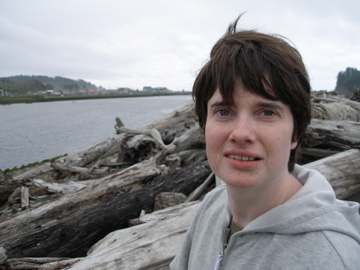


Privacy
I've made some progress on bringing my beloved idiot girl to Seattle. I've filled out the paperwork. I've explored things to the point that I know I can take a leave of absence from my work when she comes. And I'm going to do this. I've made the commitment.
I spent time this week talking to the good people who run the group home where my daughter now lives--in Utah. I had a conversation with the administrator there that stunned me. I think of Bevin, my daughter, as having two extremes for coping with stress. On the one extreme, the anxiety builds up and she acts out. She runs around, can't settle. She becomes angry, grumpty, and she exhibits a range of alarming behaviors. She sniffs, she hits, she picks up things and stashes them in closets, she slams doors, she flushes the toilet again and again, she begs for soda and candy, opening the refrigerator door, raging if she doesn't get her way. At the extreme these behaviors overwhelm me. I don't know what to do. I have a hard time remaining calm, not becoming alarmed, angry, sad, tearful.
And then there's the other extreme. She lies down on a couch. Draws a blanket over her head. And sleeps. Goes into a deep quiety place that is something like a trance. I feel guilty when I let this go on too long. I want her engaged in the world. I love her happy smile, her affection, her openness to whatever comes next. I'm afraid if she goes too deep, she won't come back. She becomes less engaged, less the wonderful little person I know she is. I feel guilty, because this Bevin is so much easier to deal with than the other Bevin.
I was stunned because the administrator at her group home told me she had never seen the latter behavior. Only the former. And she told me something I found it hard to believe. Bevin has a hard time sleeping. Because of lack of sleep she is grumpy. And if anything this seems to becoming worse. She wakes up in the wee hours of the night, roams through the home, has even managed to get outside and set off the alarms.
I was stunned because I think of Bevin as someone with an amazing capacity to sleep, to descend into a deep quiet place. As I thought about this I realized that Bevin lives in a situation where she is always in a group. A group home after all. She has a roommate. The television is always on, a group of women/girls, a group of helpers. She travels on a bus with a group to "work"--spends the day with that group. I was stunned today to think that Bevin basically has no privacy. No time alone. She does need constant supervision. You can't leave her alone. She can't make any choices. But in her current life, this means she is always in a group.
Bevin definitely has anxiety in situations of transition, in crowds, in public places, in transitions, in noise. And in important ways I realize this is the structure of how she lives. No privacy. No time alone.
She has an amazing capacity to be happy. To live where she is. But that seems stressed.
I don't know what this means about where Bevin is right now. For the last few times I have spent time with her, she has been so pleasant. But I realize now how tired she must be, what a relief the quiet and peace of being alone, being able to put her head under a blanket and lose herself, must seem. Bevin is amazingly difficult to move out of a pattern. I wonder what imprint this time of living in a group, in a crowd, will have made on her. I can understand a certain kind of anxiety I see in her behavior now. But what might that mean overall in the range of life she can live.
This leaves me more committed to bring her to Seattle and to create a place where she can be alone, be quiet, be isolated. But in the context of a balanced life. What will this mean? How will she have changed? I look forward to this. I'm committed to this at this point in my life. But I am a bit afraid. What will this mean? And am I a big enough person.
I spent time this week talking to the good people who run the group home where my daughter now lives--in Utah. I had a conversation with the administrator there that stunned me. I think of Bevin, my daughter, as having two extremes for coping with stress. On the one extreme, the anxiety builds up and she acts out. She runs around, can't settle. She becomes angry, grumpty, and she exhibits a range of alarming behaviors. She sniffs, she hits, she picks up things and stashes them in closets, she slams doors, she flushes the toilet again and again, she begs for soda and candy, opening the refrigerator door, raging if she doesn't get her way. At the extreme these behaviors overwhelm me. I don't know what to do. I have a hard time remaining calm, not becoming alarmed, angry, sad, tearful.
And then there's the other extreme. She lies down on a couch. Draws a blanket over her head. And sleeps. Goes into a deep quiety place that is something like a trance. I feel guilty when I let this go on too long. I want her engaged in the world. I love her happy smile, her affection, her openness to whatever comes next. I'm afraid if she goes too deep, she won't come back. She becomes less engaged, less the wonderful little person I know she is. I feel guilty, because this Bevin is so much easier to deal with than the other Bevin.
I was stunned because the administrator at her group home told me she had never seen the latter behavior. Only the former. And she told me something I found it hard to believe. Bevin has a hard time sleeping. Because of lack of sleep she is grumpy. And if anything this seems to becoming worse. She wakes up in the wee hours of the night, roams through the home, has even managed to get outside and set off the alarms.
I was stunned because I think of Bevin as someone with an amazing capacity to sleep, to descend into a deep quiet place. As I thought about this I realized that Bevin lives in a situation where she is always in a group. A group home after all. She has a roommate. The television is always on, a group of women/girls, a group of helpers. She travels on a bus with a group to "work"--spends the day with that group. I was stunned today to think that Bevin basically has no privacy. No time alone. She does need constant supervision. You can't leave her alone. She can't make any choices. But in her current life, this means she is always in a group.
Bevin definitely has anxiety in situations of transition, in crowds, in public places, in transitions, in noise. And in important ways I realize this is the structure of how she lives. No privacy. No time alone.
She has an amazing capacity to be happy. To live where she is. But that seems stressed.
I don't know what this means about where Bevin is right now. For the last few times I have spent time with her, she has been so pleasant. But I realize now how tired she must be, what a relief the quiet and peace of being alone, being able to put her head under a blanket and lose herself, must seem. Bevin is amazingly difficult to move out of a pattern. I wonder what imprint this time of living in a group, in a crowd, will have made on her. I can understand a certain kind of anxiety I see in her behavior now. But what might that mean overall in the range of life she can live.
This leaves me more committed to bring her to Seattle and to create a place where she can be alone, be quiet, be isolated. But in the context of a balanced life. What will this mean? How will she have changed? I look forward to this. I'm committed to this at this point in my life. But I am a bit afraid. What will this mean? And am I a big enough person.
Subscribe to:
Posts (Atom)